
8 min
3.3.2026
Scanning barcodes when dispensing medication provides increased security
Text:
Karen Gahrn
Photo:
North Jutland Regional Hospital/GS1
Sometimes the computer says, "Bing!"
"And then you just think: 'It's IT too, now it's not working!'" says nurse Jette Kragh.
- But then you can see on the screen that it's because the medicine you're dispensing doesn't match what the doctor has prescribed. I might have 25 mg when I should be giving 50. Or I might have an injection pen when I should be giving a syringe.
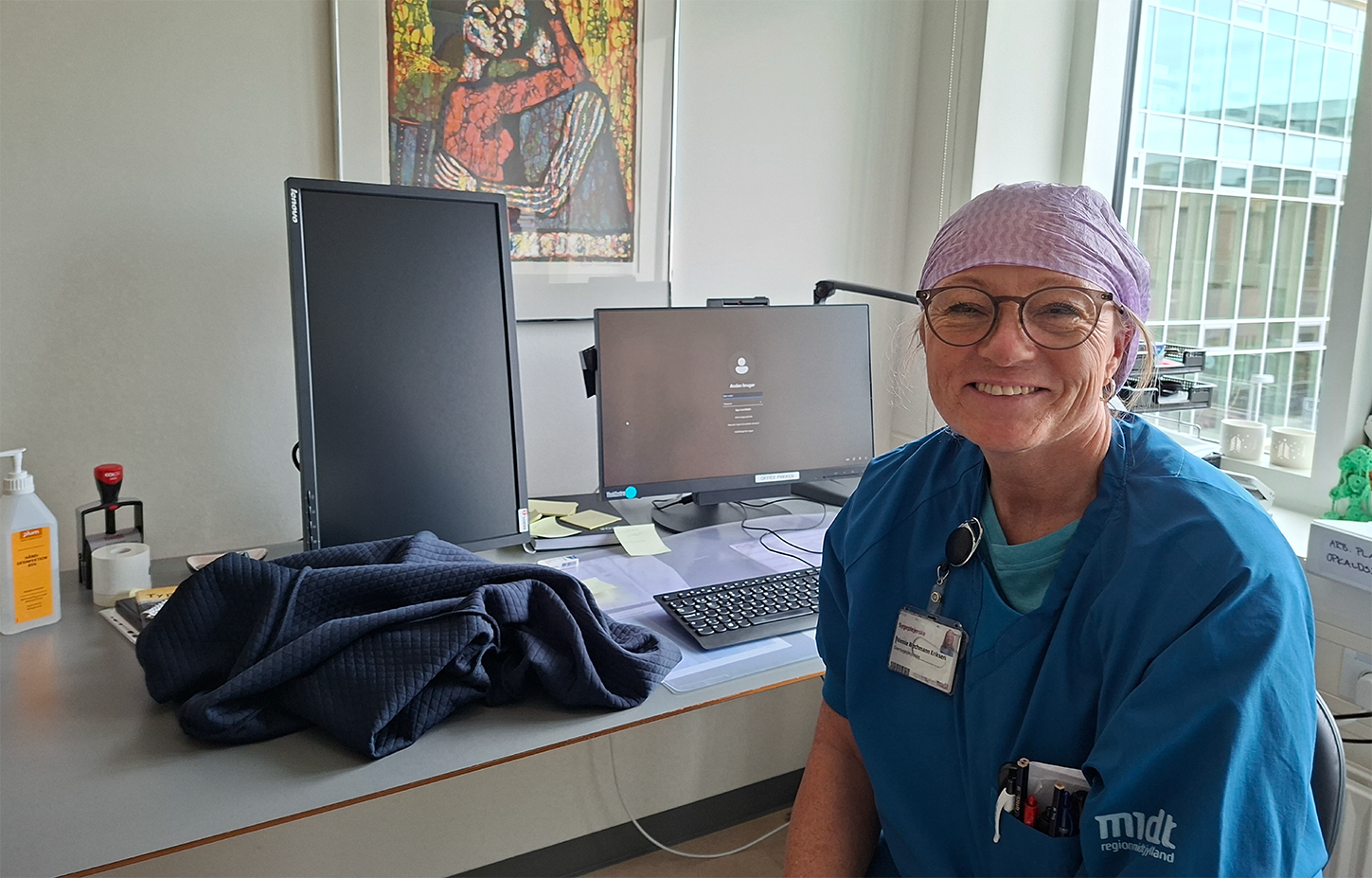
Jette Kragh has been a nurse at the Rheumatology Outpatient Clinic in Hjørring for almost 30 years. She is a strong advocate for the scanning of medication, which is becoming mandatory at all outpatient clinics in the North Denmark Region.
"We have taken the lead because we can see the benefits of scanning medication, both for patients and for us as staff," she says.
The Rheumatology Outpatient Clinic has been part of a pilot project since fall 2024. They have found that the new procedure requires much less manual input, raises fewer questions, and provides greater assurance that the right medication is given to the right patient.
The project was initiated because the region had to comply with the requirement to report medicine data—including item numbers and batch numbers from the GS1 barcode—to the Hospital Medicine Register.
- There is a legal requirement. But at the clinic, our focus is on security, explains IT project manager Karen Melchior Jensen, who has overall responsibility for implementation.
- Instead of viewing scanning as a purely administrative task, we decided to use it for something that both enhances patient safety and creates peace of mind for staff.


Instead of viewing scanning as a purely administrative task, we decided to use it for something that both enhances patient safety and creates peace of mind for staff.
What is a batch number?
A batch number is a unique identification number assigned to a specific quantity of products manufactured or purchased together under uniform conditions. It enables goods to be traced through the supply chain from production to sale, which is crucial for quality control and rapid recall in the event of defects.
Advantages of medical scanning
At the Rheumatology Outpatient Clinic, it has long been a requirement to register batch numbers on some arthritis medications before dispensing them. The outpatient clinic saw the advantage of this and therefore decided to register the numbers on all dispensed medications.
"Until now, we have entered all batch numbers manually because we could see the advantage of registering them. We know that medicines have side effects, and if patients report them, the Danish Medicines Agency calls us and asks for the batch numbers so that they can trace the medicine," explains Jette Kragh.
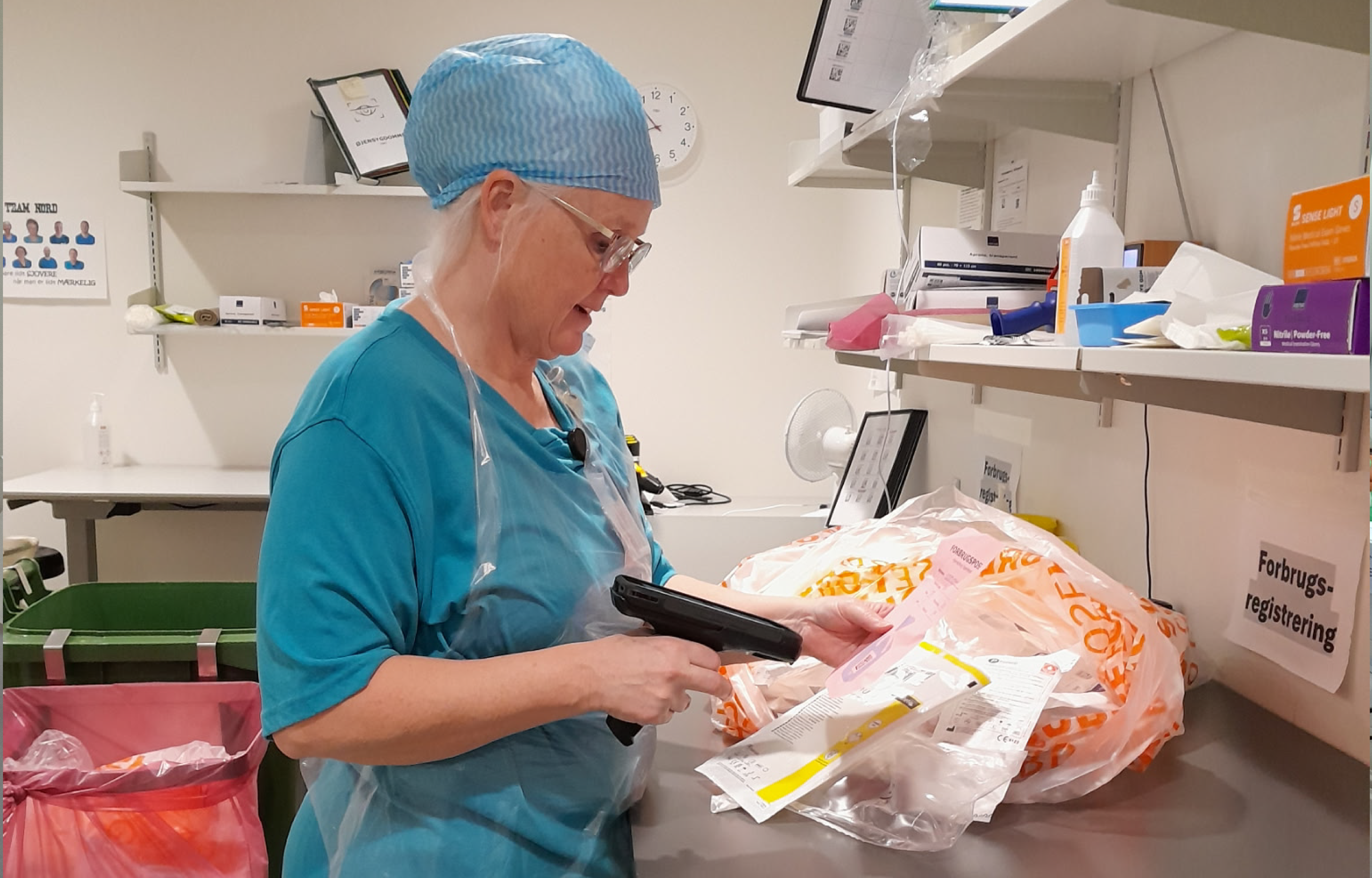
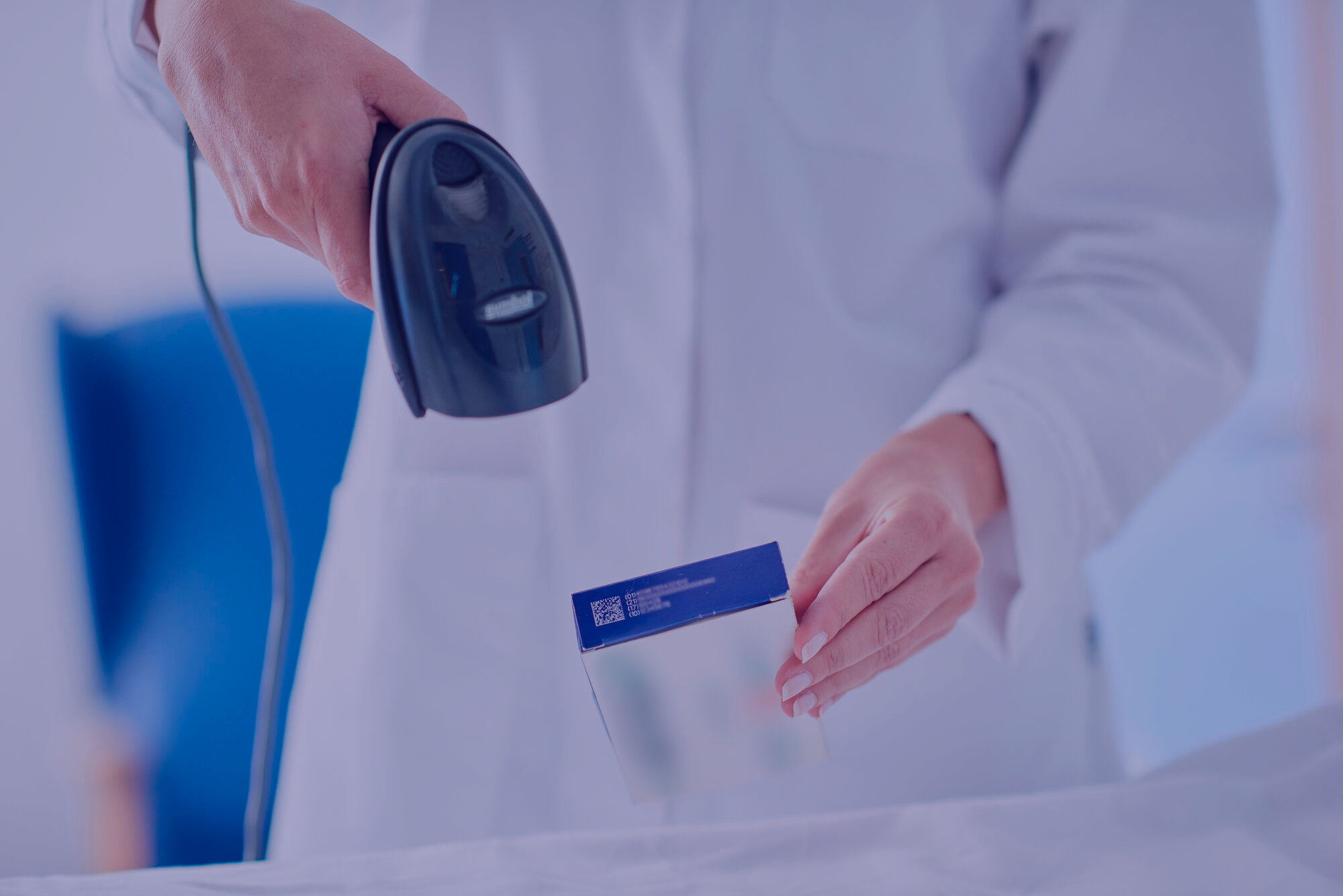
But whereas nurses previously had to enter numbers and letters manually before dispensing medication, this is now done using a hand scanner as part of their daily routine.
Today, I still have to enter the patient's social security number and open their medication card, but when I select the prescribed medication, the cursor is already where I can scan. Then I take three preparations, for example, and scan them, explains Jette Kragh.
- At the outpatient clinic, we talk openly about the fact that even though we think we never do anything wrong, we do. We have had experiences where a patient has called and said, for example, that they usually get a different dose. And the person who dispensed the medication did not do so intentionally. At the time, it just wasn't noticed that the patient should have received 10 mg less.
Since the outpatient clinic switched to barcode scanning, Jette Kragh says they have not experienced this type of error.
"We don't have any incorrect deliveries today, where everyone uses scanners. We haven't received any returns or inquiries from patients," she says.
At the Rheumatology Outpatient Clinic, it has long been a requirement to register batch numbers on some arthritis medications before dispensing them. The outpatient clinic saw the advantage of this and therefore decided to register the numbers on all dispensed medications.
"Until now, we have entered all batch numbers manually because we could see the advantage of registering them. We know that medicines have side effects, and if patients report them, the Danish Medicines Agency calls us and asks for the batch numbers so that they can trace the medicine," explains Jette Kragh.
But whereas nurses previously had to enter numbers and letters manually before dispensing medication, this is now done using a hand scanner as part of their daily routine.
Today, I still have to enter the patient's social security number and open their medication card, but when I select the prescribed medication, the cursor is already where I can scan. Then I take three preparations, for example, and scan them, explains Jette Kragh.
- At the outpatient clinic, we talk openly about the fact that even though we think we never do anything wrong, we do. We have had experiences where a patient has called and said, for example, that they usually get a different dose. And the person who dispensed the medication did not do so intentionally. At the time, it just wasn't noticed that the patient should have received 10 mg less.
Since the outpatient clinic switched to barcode scanning, Jette Kragh says they have not experienced this type of error.
"We don't have any incorrect deliveries today, where everyone uses scanners. We haven't received any returns or inquiries from patients," she says.
Challenges in medical scanning
Since fall 2024, scanning prior to dispensing medication has become part of the daily workflow at the Rheumatology Outpatient Clinic.
"I find that it has been easy to support the procedures we already have in place. Right at the beginning, it perhaps took a little longer, but that is definitely not the case today," says Jette Kragh, who can only think of a few things she would like to see changed.
- Today, the outpatient clinic has three hand scanners. To achieve a 100 percent solution, we should have scanners in more places, she says.
- But our biggest challenge right now is that when we open a package, it contains individual medicine bottles, pens, or syringes—not a barcode. If I could scan all 20 small vials or four syringes, it would be easier.
Currently, only barcodes with batch numbers are required on outer packaging. Nordjyllands Regionshospital is in dialogue with GS1 regarding the need for barcodes on inner packaging.
"This is where we can really use GS1 to make our wishes come true. There has to be demand for it to be implemented," says project manager Karen Melchior Jensen.
She is the one who paved the way for decisions that scanning before dispensing medication should be mandatory at outpatient clinics in the North Denmark Region.
- Some systemic changes need to be made, there must be financial backing, and it must be prioritized by management, she emphasizes.
- We need to take the implementation in stages, for example, to be able to approach manufacturers and request barcodes on inner packaging or approach suppliers and request new IT solutions, in order to implement it in all departments, including inpatient wards, which have different workflows.

We are huge fans of scanning in this department. We haven't encountered any resistance here either—everyone has embraced it because it's good for us and good for the patients.
Help getting started with scanning
One of the lessons learned from the pilot project was that a daily project manager is needed to support the implementation of medical scanning in the departments.
Rikke Stang von Kelaita has been assigned this task as of January 1. She has a background as a nurse and is currently pursuing a master's degree in Learning and Change Processes.
"An email can quickly be forgotten in a busy workday, so there is a need for someone who continuously follows up, visits the outpatient clinics, talks to the clinicians, and tailors the guidance to local needs," she says.
- Medication scanning is a safety measure for the patient, but also for the nurse. I think many of us have woken up drenched in sweat, wondering, "Did I give the right dose?"
- Research shows that medication errors are what kill the most patients. In addition to medication errors having an impact on the individual patient and the staff who make the errors, they are also expensive. They can lead to readmission and more illness, explains Rikke Stang von Kelaita.
Currently, two outpatient clinics under the North Denmark Regional Hospital are using medical scanning. Rikke Stang von Kelaita has a big task ahead of her in getting barcode scanning up and running in all outpatient clinics at all hospitals in the region.
- It must be a team process. It is important that the implementation of medical scanning is supported by management. And we need to create a process that fits the workflows of each individual department, she emphasizes.
Just keep going!
At the Rheumatology Outpatient Clinic in Hjørring, the staff has embraced medical scanning.
- I would estimate that we scan approximately 90 percent of the medication we dispense. Therefore, we have identified workflows that are effective, says nurse Jette Kragh.
- We are huge fans of scanning in this department. We haven't encountered any resistance here either—everyone has embraced it because it's good for us and good for the patients.
Jette Kragh has the following advice for other outpatient clinics that are about to start medical scanning:
- It is important that management states that this is a mandatory task. Then, staff must be informed and trained, and a deadline must be set for when to begin. In my opinion, everyone should do this from the outset, and then we can tackle any challenges that arise along the way together, she says.
What would she say to a skeptical colleague from another department?
- I know that things are different in the wards. But in the outpatient clinics, with the workflows we have here, you just have to get started. You just have to get on with it! It's a great tool to use in everyday life, both for yourself and for safety.
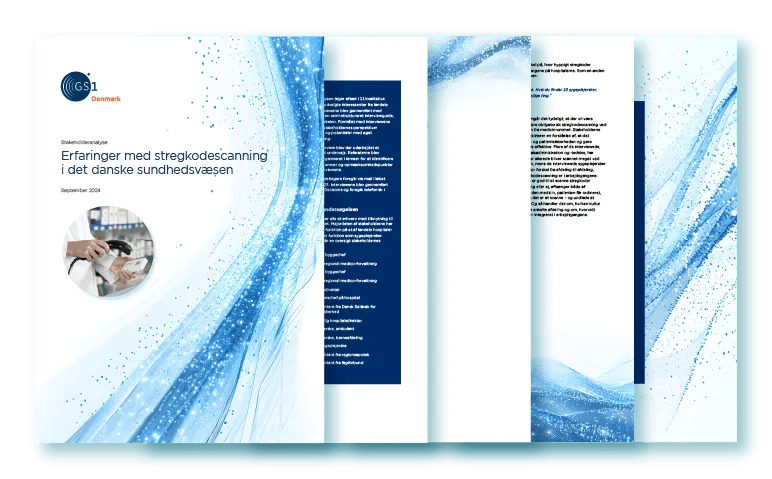
Are you curious to learn more about how increased barcode scanning can help Danish hospitals?
We have mapped out the challenges and opportunities associated with mandatory barcode scanning when dispensing medication from the medicine room.
Our analysis highlights that barcode scanning can improve patient safety and efficiency in hospitals, but there may be challenges with implementation.
Research supports the notion that medication errors are the leading cause of death among patients. In addition to the impact medication errors can have on individual patients and the staff who make the errors, they are also costly. They can result in readmission and further illness.