
8 min
30.3.2026
Close collaboration between the supply team and nurses ensures a reliable supply
Text:
Karen Gahrn
Photo:
Aarhus University Hospital, Central Denmark Region
SupplyAID is a digital warehouse and logistics system that the Central Denmark Region has developed and implemented in 10 operating departments to ensure better security of supply of medical equipment and implants. The system is closely linked to the hospitals' daily operations and is intended to ensure that operating departments always have the necessary materials available.
– It has been a great help in our everyday life because we have more time for our patients. Before, it was the nurses who were responsible for ordering goods and spent a lot of time on it, says Ane Kirkegaard, who is the specialist nurse in charge of the B&O (anesthesia and surgery) department NORD 3, which collaborates with Brain and Spine Surgery, which was one of the first operating departments to introduce SupplyAID in May 2024.
– We could find that we didn't dare go home on a Friday afternoon until we were sure that we had, for example, enough drains – and if we didn't have enough, we had to make sure to order them from other neurosurgical departments. This means that we were constantly in touch with what we had in the department and what we needed. Now we are free from all that, because Winnie and her team keep a close eye not only on what we have, but also on what is about to expire. It has been a huge help to us in everyday life.
Winnie Pedersen worked in retail before becoming the merchandise manager for the department. This new role was created as part of the SupplyAID initiative. Today, there are three employees on the merchandise team.


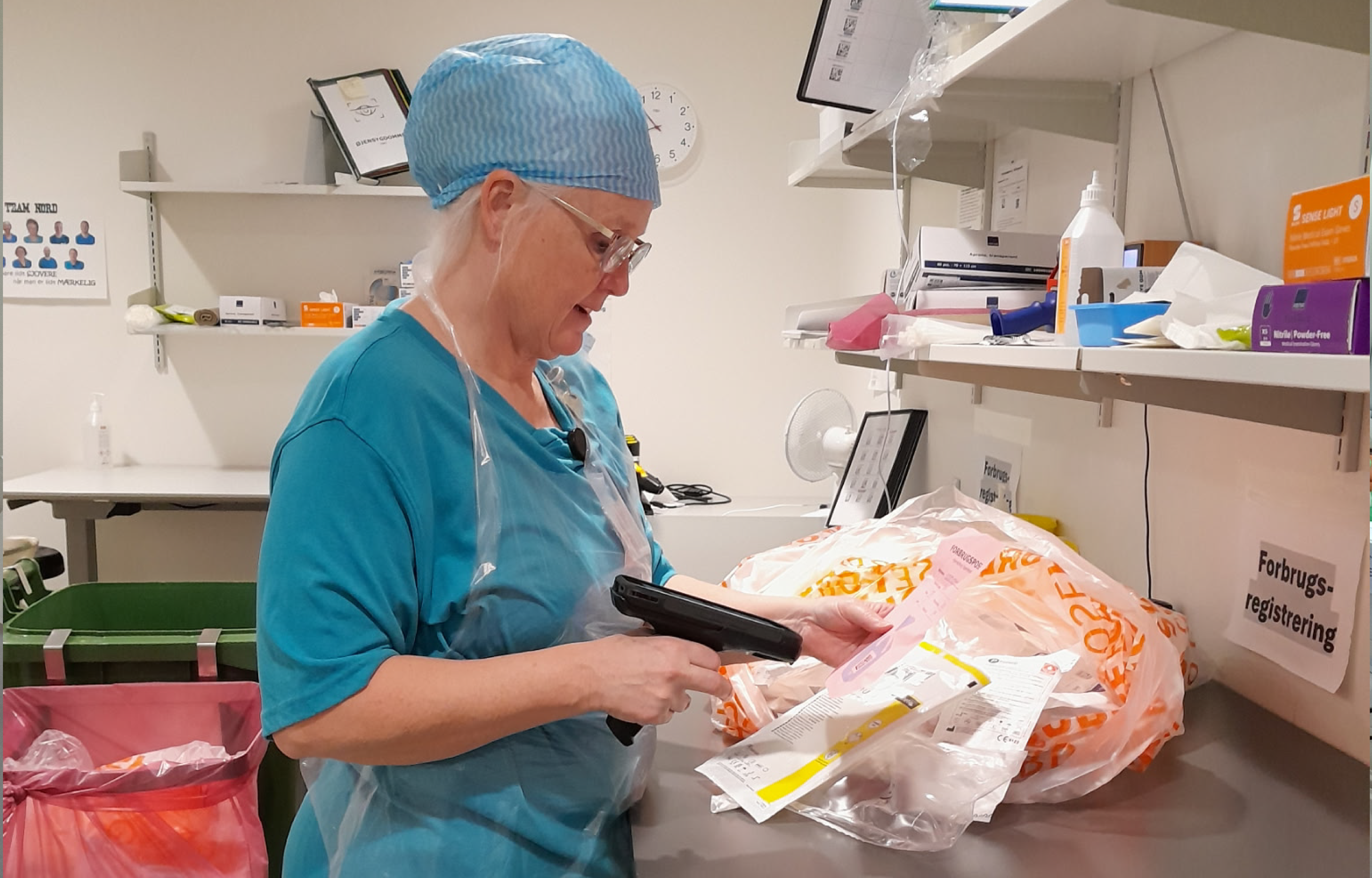
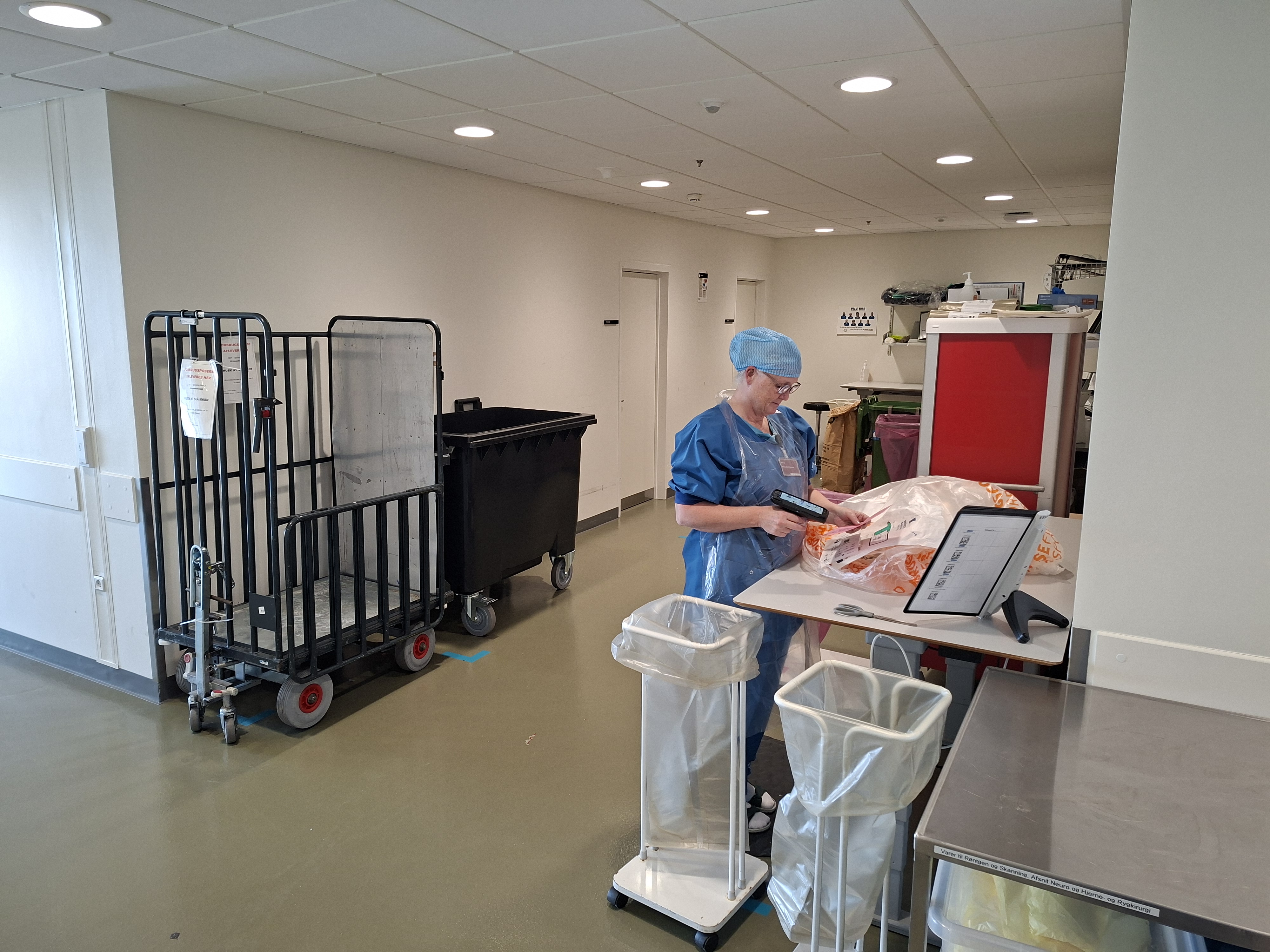
Every morning, Winnie Pedersen scans the GS1 barcodes and Data Matrix codes on the packaging of the disposable supplies used during the previous day’s surgeries. As the inventory manager, she records the usage in the hospital’s digital inventory and logistics system so that stock levels are updated, new supplies can be ordered in a timely manner, and the surgical department always has the necessary equipment on hand.
The work also provides an overview of consumption, documents traceability of medical equipment and helps prevent shortages in a busy clinical day.
“We start the day by recording the supplies that the nurses placed in the supply bags in the operating rooms the day before. We enter this information into the system under a reference number linked to the patient’s procedure. Then SupplyAID tells us what items we need to order, and we place an order in RM Indkøb,” explains Winnie Pedersen.
– Then we receive goods, which are also entered and received in SupplyAID via the data matrix, so we have all the information in relation to the dock number, item number, expiration date and location linked to the item. We also look at complaints and replacement goods if something has not been delivered.

SupplyAID has the advantage that the system extends all the way to procurement. We know exactly who to contact when there are product issues. Logistics and innovation are my specialties, but I also rely heavily on close collaboration with colleagues regarding clinical matters.
Shortage of goods can have serious consequences
SupplyAID helps create an overview of when an item is taken from the warehouse, when it is used in an operation, and which patient or procedure it is associated with.
– I find that I can do what I am trained to do. I am not trained to manage inventory and order goods, says Ane Kirkegaard.
– Now I can use my nursing in a completely different way. I also experience a freedom mentally, because I used to think a lot about whether we now had the goods we needed. You tell Winnie and then things get done. It has really made our everyday lives easier.
If the operations department experiences a shortage of goods, it can have serious consequences.
– The system helps us avoid operations being canceled by predicting the amount of products we need to have in stock. We have had years where there have been supply failures. It has been a big challenge, and it can be stressful to fear that we will have to compromise on quality, says Ane Kirkegaard.
– If we can't get what the surgeon needs, we have to cancel our patients. This rarely happened because we went in and fought the battle to get what we needed, but it was of course a risk.
That risk is lower today, Winnie Pedersen emphasizes:
– SupplyAID has the advantage that the system goes all the way to purchasing, we know exactly who to contact when there are product problems. Logistics and innovation are my specialty, but I also rely heavily on close collaboration with colleagues with regard to clinical matters.
SupplyAID helps create an overview of when an item is taken from the warehouse, when it is used in an operation, and which patient or procedure it is associated with.
– I find that I can do what I am trained to do. I am not trained to manage inventory and order goods, says Ane Kirkegaard.
– Now I can use my nursing in a completely different way. I also experience a freedom mentally, because I used to think a lot about whether we now had the goods we needed. You tell Winnie and then things get done. It has really made our everyday lives easier.
If the operations department experiences a shortage of goods, it can have serious consequences.
– The system helps us avoid operations being canceled by predicting the amount of products we need to have in stock. We have had years where there have been supply failures. It has been a big challenge, and it can be stressful to fear that we will have to compromise on quality, says Ane Kirkegaard.
– If we can't get what the surgeon needs, we have to cancel our patients. This rarely happened because we went in and fought the battle to get what we needed, but it was of course a risk.
That risk is lower today, Winnie Pedersen emphasizes:
– SupplyAID has the advantage that the system goes all the way to purchasing, we know exactly who to contact when there are product problems. Logistics and innovation are my specialty, but I also rely heavily on close collaboration with colleagues with regard to clinical matters.
A benefit for patients, staff and finances
Winnie Bechmann Eriksen is head nurse and has overall responsibility for SupplyAID at Anesthesia and Surgery NORD, Brain and Spine Surgery Department NORD 3. She also participates in coordinating data meetings between clinicians, supply and innovation.
– Overall, SupplyAID is a huge help in our day-to-day work because the people who manage the system know what they’re doing. And as Ane says, that’s not something we’re trained to do. The real challenge lies in product knowledge, which is why close collaboration between the product team and the nurses is essential. Here, for example, Ane can help scout the market, and in that way, the nurse’s specialized knowledge is indispensable, she says.
– The new system has brought a new professional group into our department. It has required getting used to on both sides. But it is a dynamic collaboration that develops the better we get to know each other.
SupplyAID has been a financial benefit for the department, emphasizes the head nurse and gives a few examples:
– For example, the merchandise team can observe that we have a product on the shelves that we never use, and then we can contact the surgeons and perhaps have it phased out and that way we can clean up. We also have financial success in terms of being able to collaborate with the surgical department on large-volume purchases for special patient groups. This ensures that we do not run into supply problems, and that is a win-win for both the patient and the financial side.

SupplyAID makes it easy to pull data about when a specific item becomes critical because everything is recorded. This means everyday life feels more secure.
“It’s important to us that we can obtain accurate data. We recently needed data on a specific type of drain: How many procedures do we perform? How many drains do we use? We were able to turn to the supply team, who were able to find the exact data,” says Winnie Bechmann Eriksen.
– We are a very small specialty and use products that you can't just borrow from other operating rooms. What we use for brain surgery is so special that we have to be ahead of the curve all the time. We get patients in urgently who are very, very ill and need to be operated on quickly, so we are deeply dependent on the navigation working so that we can ensure our everyday lives.
It has been a great help in our everyday lives because we have more time for our patients. Before, it was the nurses who were responsible for ordering supplies and spent a lot of time on it.